The problem: setup time eats spindle time
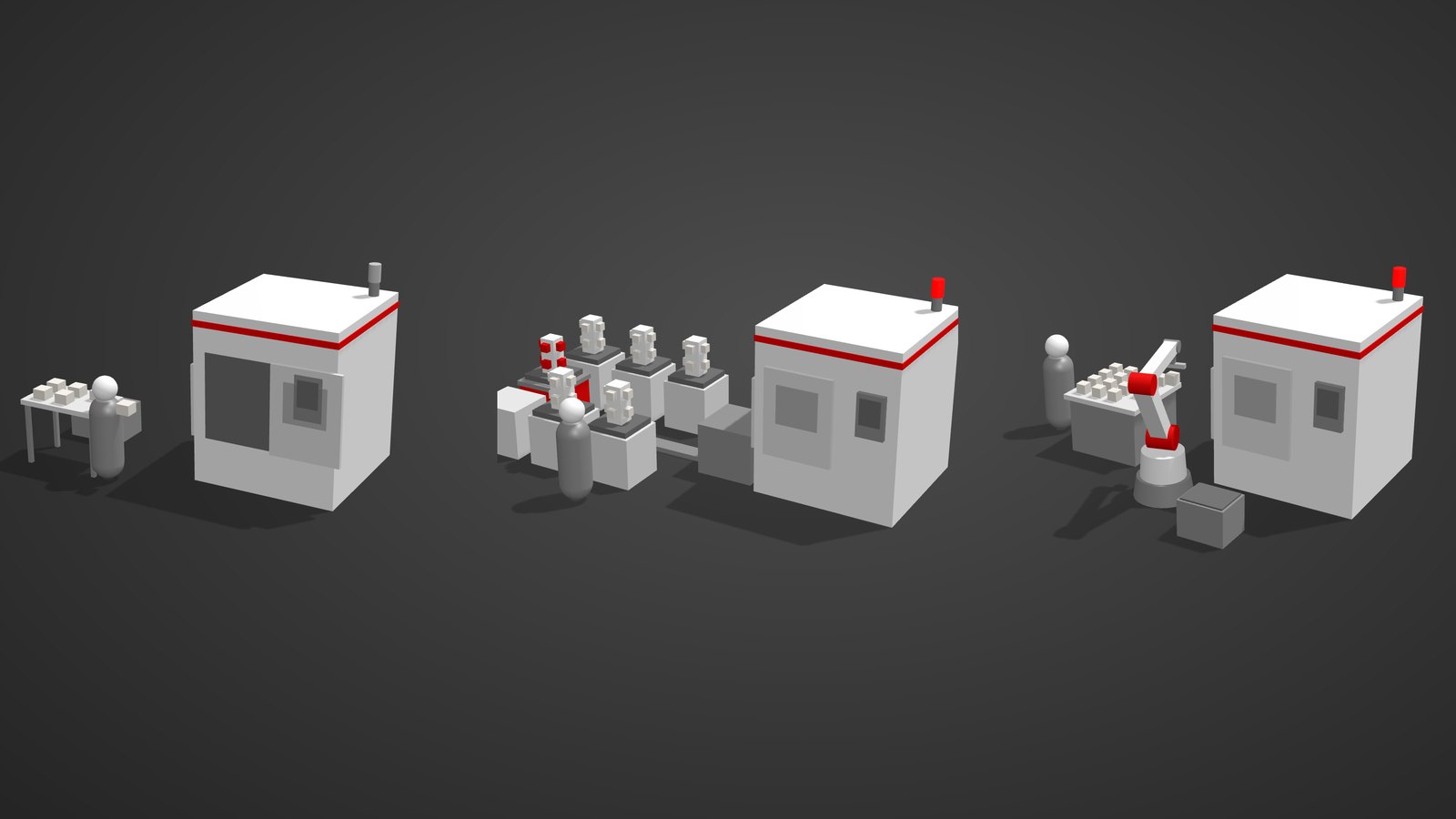
When every part is clamped individually in a vise, the same routine repeats: open the door, unclamp, clean, clamp, probe, close the door. With short cycle times this share quickly exceeds the actual cutting. The expensive machine stands still and the operator is tied up.
The solution: many parts in one setup
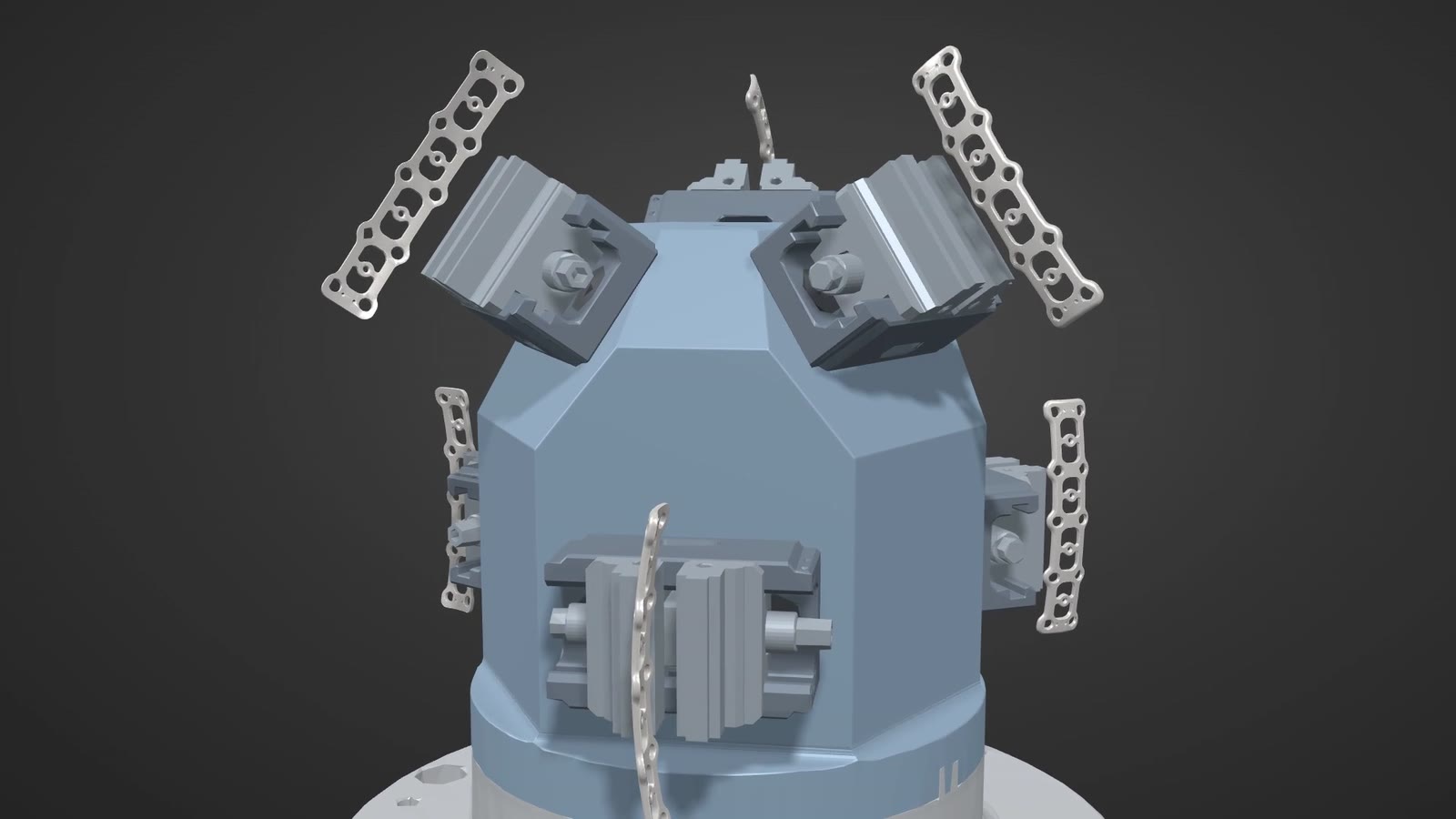
- Tombstone (clamping tower): a vertical base with several faces, each holding one or more clamps. The faces are machined one after another via the rotary axis.
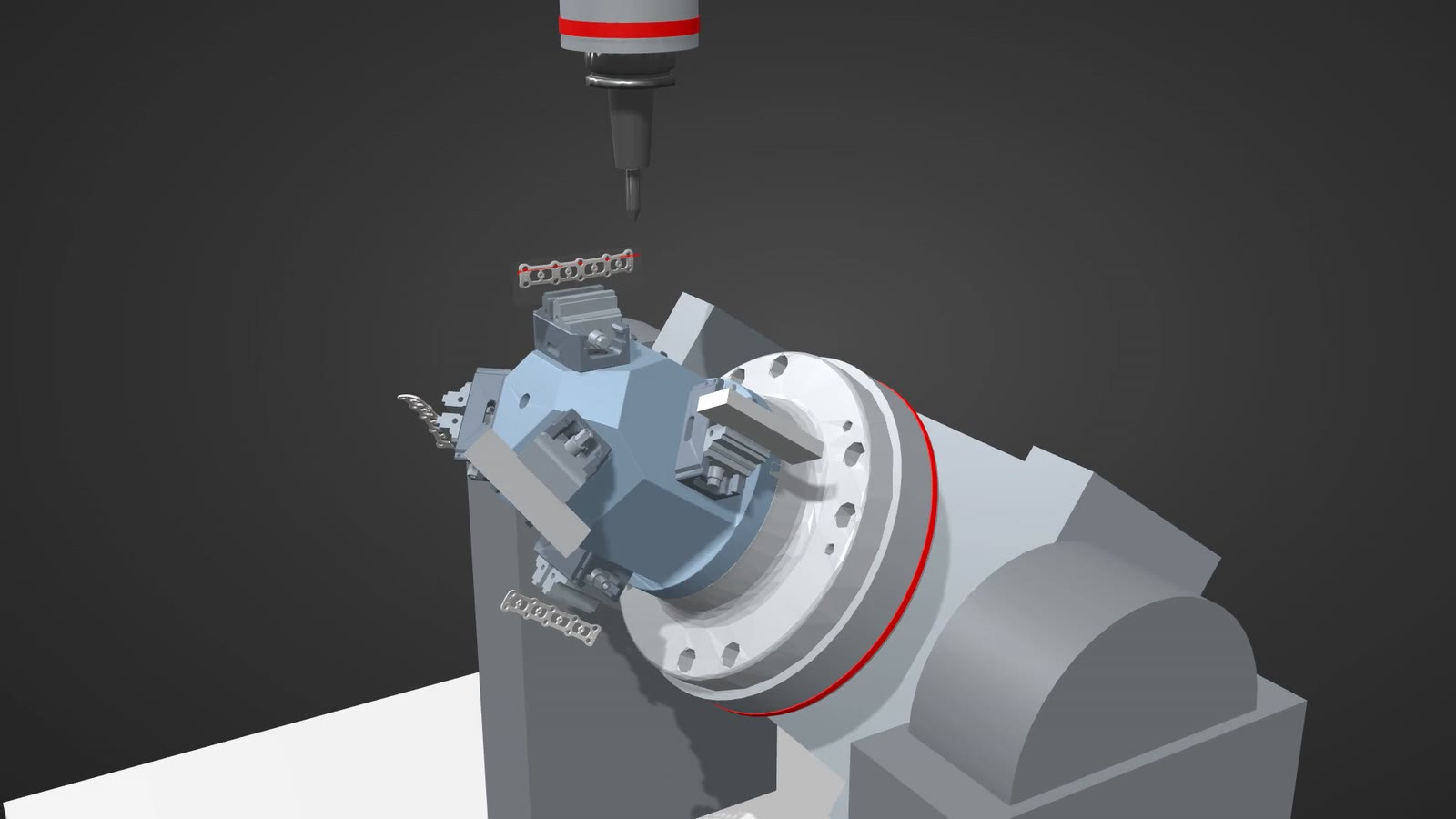
- Fixture pyramid: inclined clamping faces so the tool on a 5-axis machine can reach the parts from above and from the side.
- Multi-clamp vises and zero-point systems: several parts side by side, quick to change and repeatable.
What it brings
- Less downtime: set up once, make many parts.
- Longer unattended running, e.g. over lunch or overnight.
- Fewer tool changes, because one tool machines all parts in sequence.
- More consistent quality, because all parts are made in the same datum.
What matters in the design
- Accessibility: tool and holder must reach all features without colliding with neighbouring parts or the tower.
- Clamping: design jaws and clamping faces so each part locates repeatably and is held securely.
- Grid and datum: a clear grid on the base makes programs reusable.
- Weight and work envelope: tower, clamps and parts must suit the table and the tilting range of the machine.
The role of the CAM program
Multi-part fixturing stands or falls with the program. A good approach is to let each tool machine as many parts as possible before changing, with short, collision-free moves between parts. In hyperMILL such jobs can be built with transformations and multiple setups. Simulation with the complete fixture is a must here, because the obstacles are packed into a small space.
Calculator: does a tombstone pay off?
Do the maths: does a tombstone pay off?
Enter your own values. Every field can be changed, results update instantly.
| SingleMachine waits while clamping | TombstoneMachine waits while reloading | Pallet changer2nd tower is loaded while the 1st one runs | |
|---|---|---|---|
| Time per part | |||
| vs. single | – | ||
| Machine idle per part | |||
| Machine runs unattended in one block | |||
| Parts per shift |
Tool change time per part: . Assumptions: on the tombstone each tool is changed in only once for all parts (same machining per part). Indexing the tower between sides is included in the machining time. Guide values, no guarantee.
Frequently asked questions
From how many parts does a tombstone pay off?
It depends on the ratio of setup to machining time. The shorter the machining per part and the more often the part is made, the faster multi-part fixturing pays off.
Do I need hydraulic clamping?
Not necessarily. Manual clamps are cheaper and sufficient for many applications. Hydraulics pay off mainly with very many parts or in automated cells.
Does this work on a 3-axis machine?
With an additional rotary table or indexer, yes. Without a rotary axis, parts can still be clamped side by side on the table.