Why the machine stands still so often
In many shops the milling machine only runs for part of the day. It waits while parts are clamped, during breaks, at shift change and after hours. A machine that only runs during one staffed shift is rarely more than 30 % utilised over 24 hours. This is where automation comes in: clamping and machining are separated, and the machine keeps running without an operator.
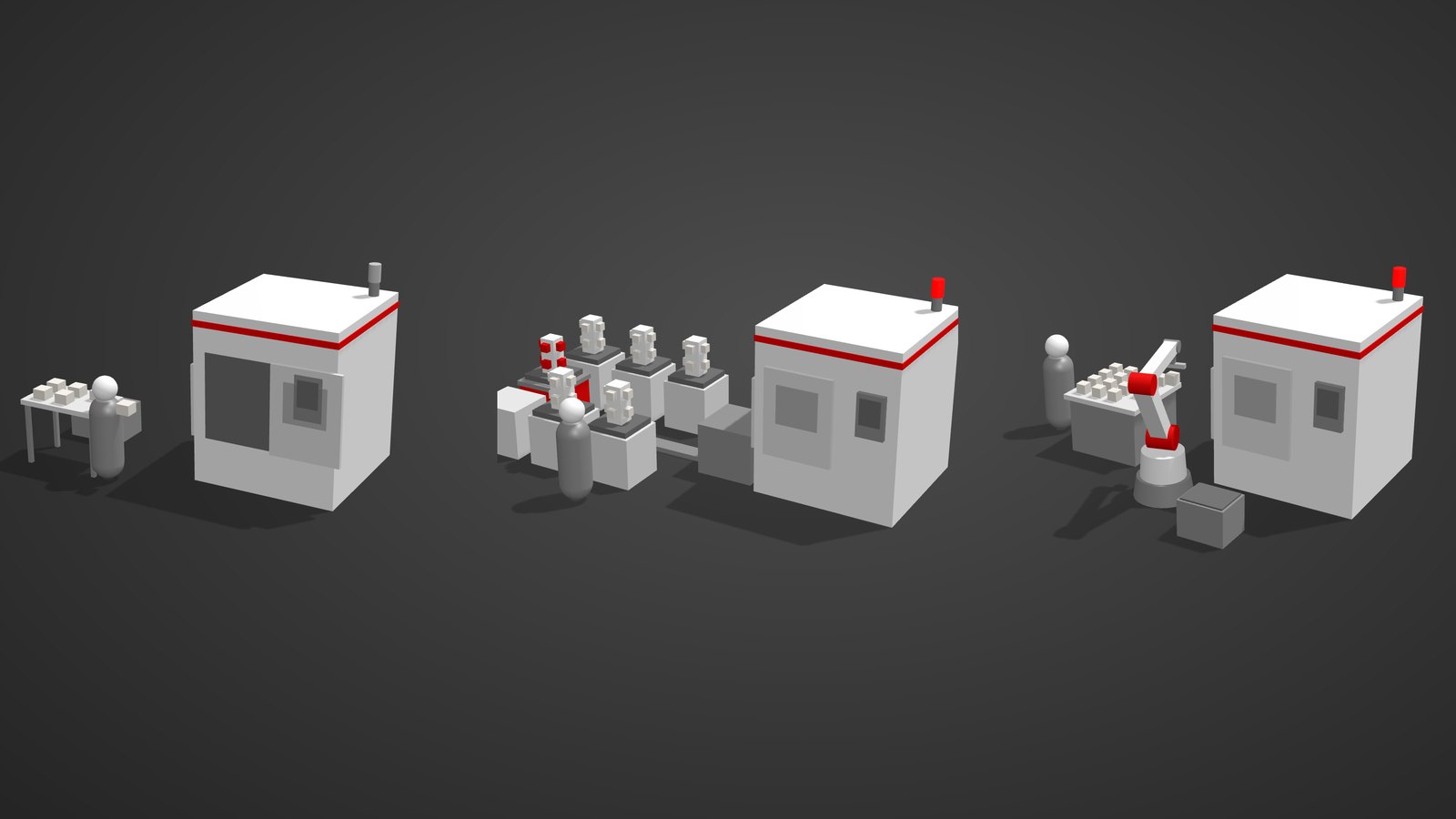
The levels of automation
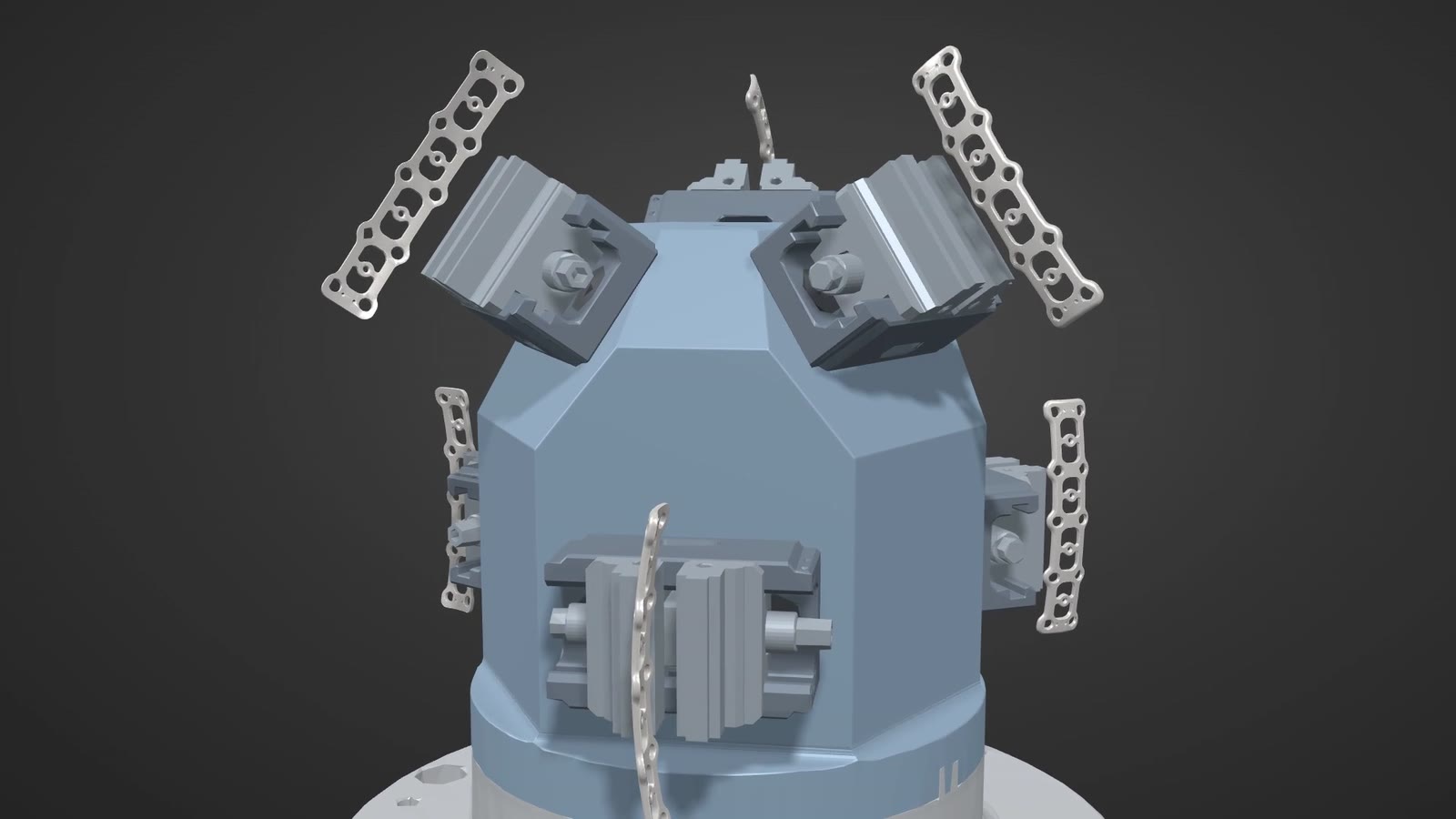
- Standalone with multi-part fixturing: a tombstone or fixture pyramid with several parts. The machine waits while reloading but then runs longer in one block. The first step, without any automation cell.
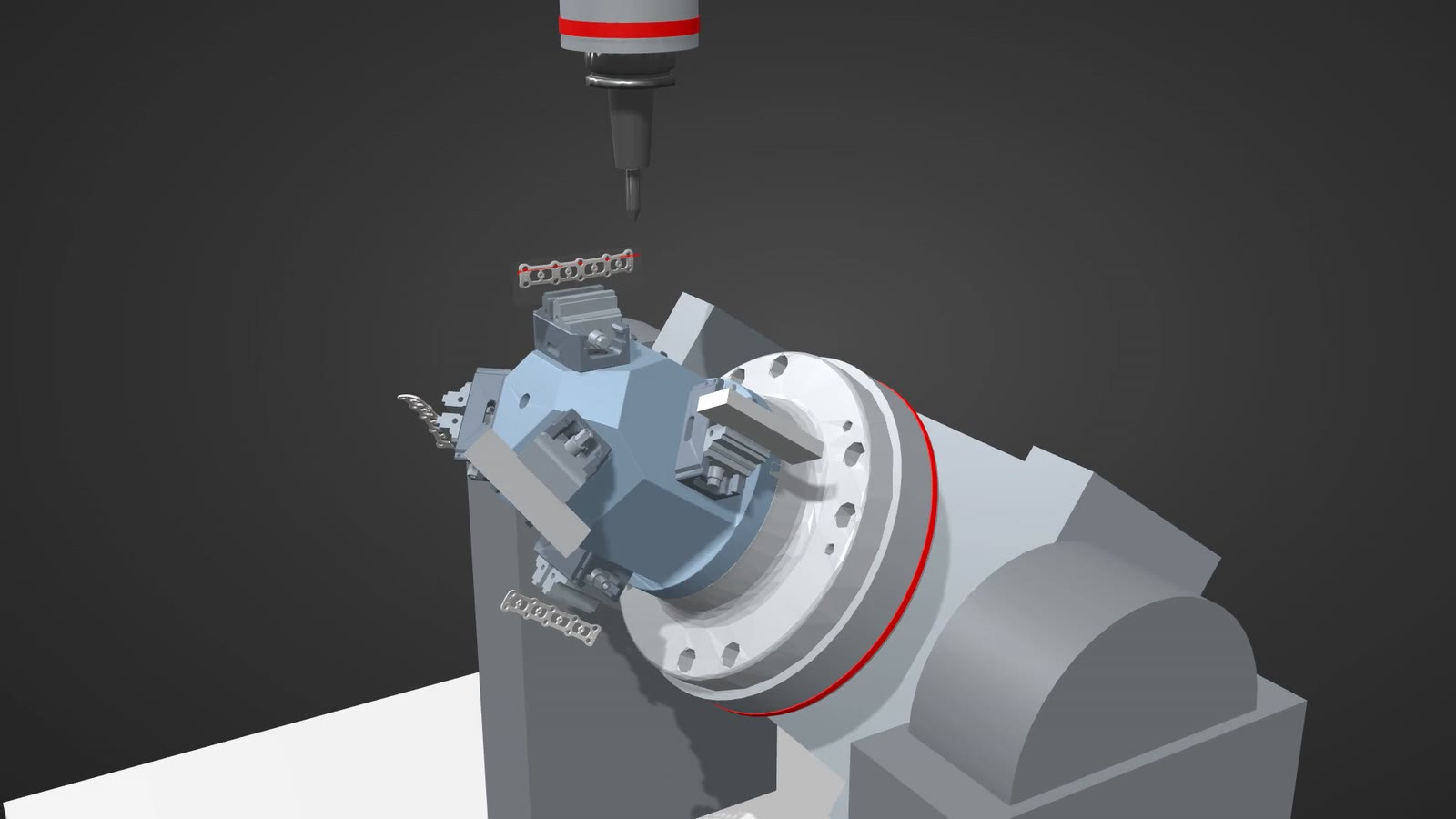
- Pallet changer (2 stations): while one pallet is machined, the operator loads the second one outside the machine. The machine only waits a few seconds for the pallet change.
- Pallet handling (pallet storage): several pallets are prepared during the shift and loaded one after another after the shift. Unattended running equals number of pallets × parts per pallet × time per part.
- Part handling with robot: a robot takes raw parts from a magazine and places them directly in the machine's fixture. The operator only fills the magazine. Ideal for smaller parts in larger quantities.
- Part and pallet handling: the robot loads pallets outside the machine. This combines short change times with large storage and little operator time.
What it means in parts per day
An example with the default values of the automation calculator: 12 minutes machining per part, 10 tool changes, 2 minutes clamping per part, 12 parts per pallet, one 8-hour shift and up to 10 hours unattended.
| Variant | Parts per day | of which unattended | Utilisation (24 h) | Operator at the machine |
|---|---|---|---|---|
| Standalone, single part | 35 | 1 | 29 % | 15 % of the shift |
| Standalone, tombstone | 49 | 12 | 37 % | 20 % of the shift |
| Pallet changer | 67 | 24 | 51 % | 28 % of the shift |
| Pallet handling (6 pallets) | 97 | 54 | 74 % | 41 % of the shift |
| Part handling (60 raw parts) | 86 | 48 | 72 % | 3 % of the shift |
| Part and pallet handling | 97 | 54 | 74 % | 3 % of the shift |
Two things stand out: the biggest jump comes from unattended time, not from faster machining. And with part handling the operator time at the machine drops almost to zero, so the operator can look after other machines.
Storage decides about the night
The machine only runs unattended as long as there is stock. With pallet handling that is number of pallets × parts per pallet, with part handling the number of raw parts in the magazine. In the example, 6 pallets with 12 parts each last a little over 13 hours, a magazine with 60 raw parts 12½ hours. With 16 hours of unattended time the pallet storage is empty after about 13 hours and the machine waits until the next shift. Part handling with 120 raw parts, on the other hand, runs through the whole night.
Requirements for unattended running
- Process-reliable NC program: unattended means nobody steps in. Tool life, sister tools, chip breaking and chip management have to be right.
- Clamping concept: zero-point or pallet system, repeatable part position, and for part handling raw parts and clamps the robot can grip.
- Simulation: the program is simulated with machine, pallet and fixtures before it runs alone at night.
- Monitoring: tool breakage detection and probing cycles catch errors before they produce a whole night of scrap.
Which solution fits?
- Few, large or different parts: pallet changer or pallet handling. Every pallet can carry a different part.
- Many small, identical parts: part handling with a robot, possibly combined with multi-part fixturing.
- Long machining time per part: even a pallet changer helps a lot, because the stock lasts long.
- Short machining time per part: stock becomes the bottleneck. More parts per pallet or a large magazine help.
Check it with your own values in the automation calculator. It compares today's production with the planned solution, including cost per part and payback.
Frequently asked questions
What is the difference between pallet handling and part handling?
With pallet handling, whole pallets with parts already clamped are exchanged. Clamping is done by hand during the shift. With part handling, a robot places every raw part individually in the machine's fixture and the operator only fills the magazine.
How long can an automated milling machine run unattended?
As long as the stock lasts and the program is process-reliable. With pallet handling that is number of pallets × parts per pallet × time per part, with part handling raw parts in the magazine × time per part. Tool life and chips set additional limits.
Does automation pay off for small quantities?
A pallet changer or pallet storage can pay off even for small batches, because different parts can be prepared on different pallets. Part handling with a robot pays off mainly for repeat parts in larger quantities.