Two kinds of 5-axis machining
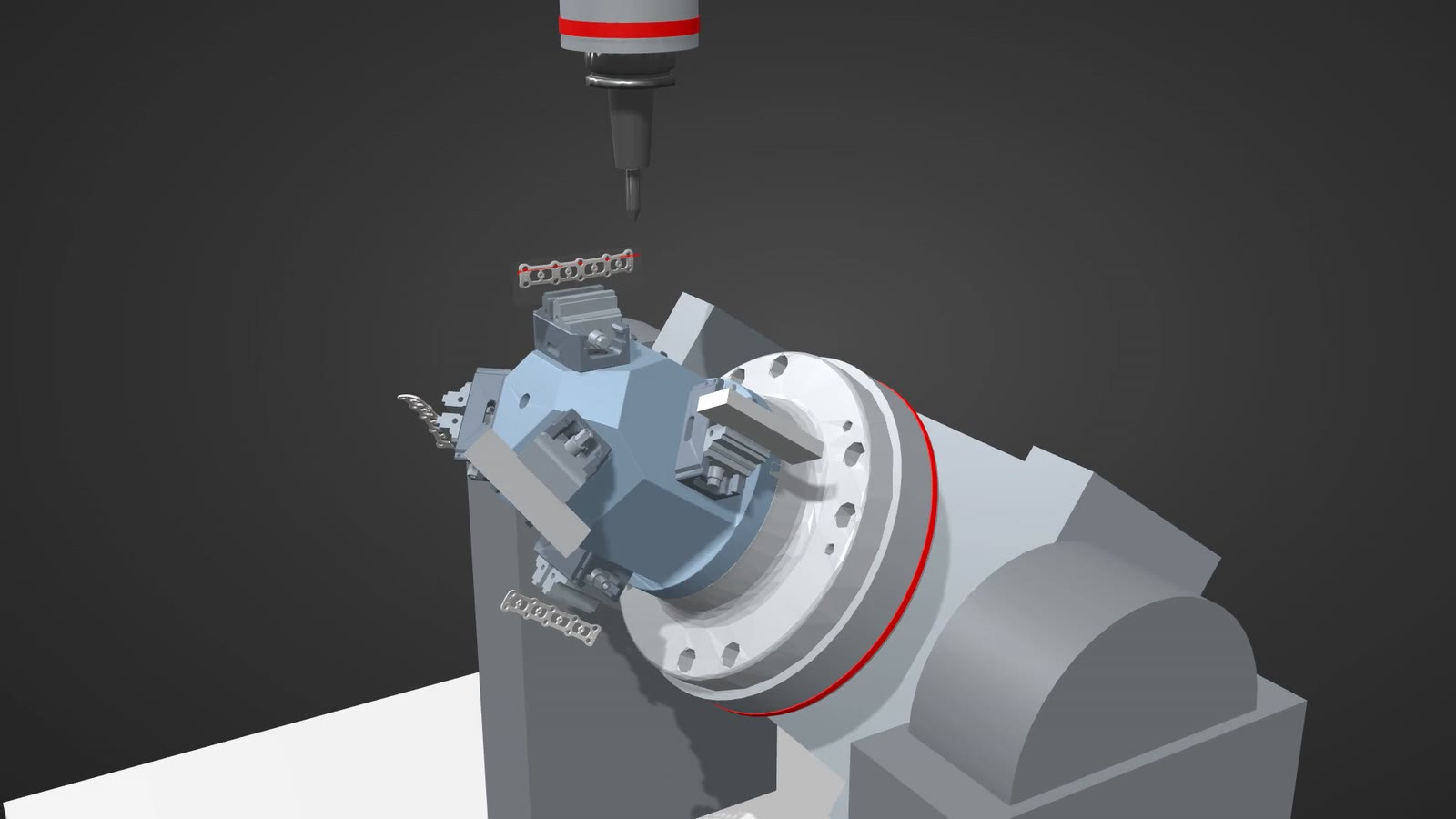
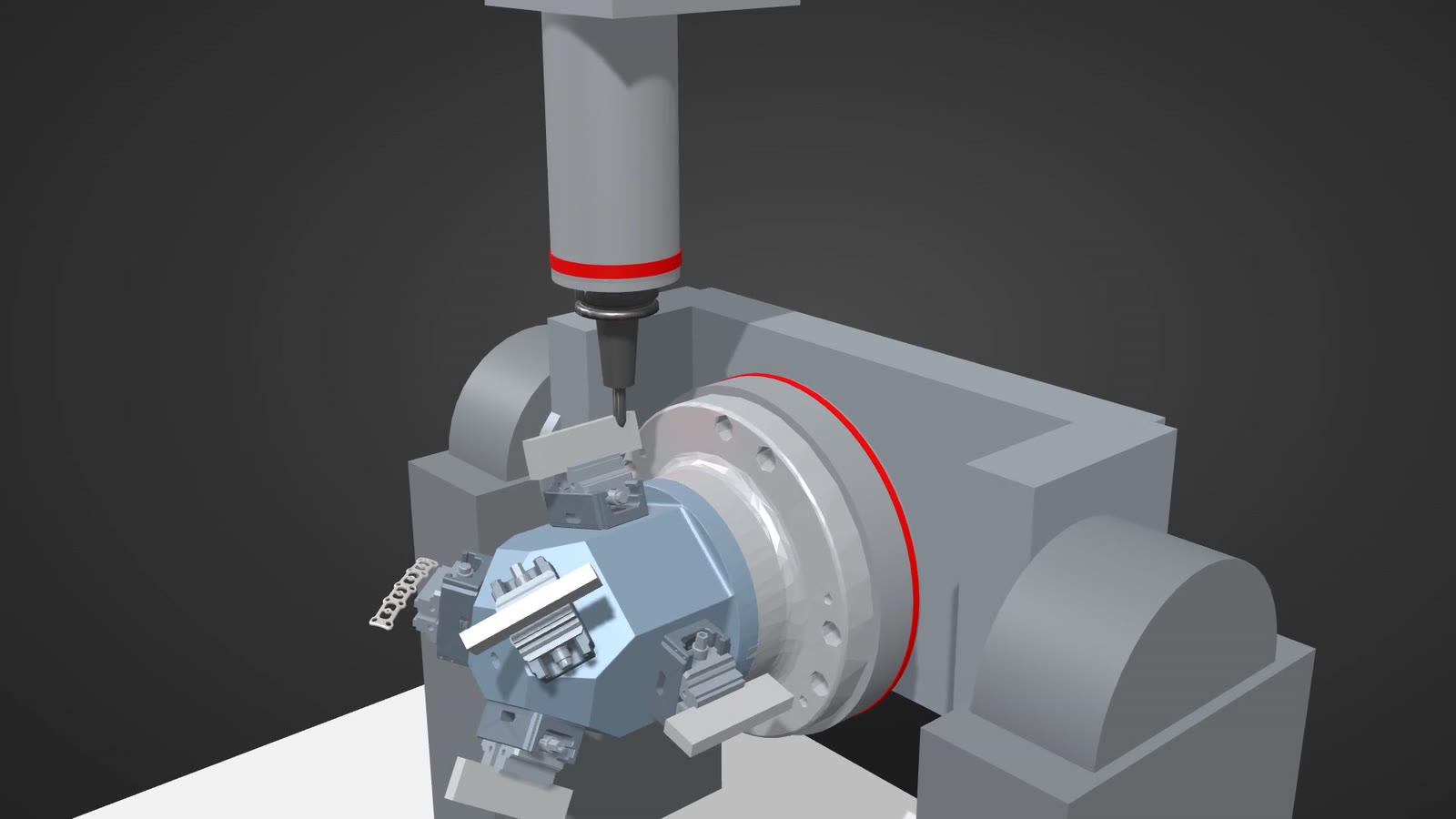
A 5-axis machine adds two rotary axes to the three linear axes X, Y and Z, for example a tilting and a rotary table or a swivel head. How these axes are used defines two ways of working:
- 3+2 (indexed machining): the rotary axes tilt the part into a fixed position and clamp. Then it is milled with three axes as usual.
- 5-axis simultaneous: all five axes move at the same time. The tool can continuously adjust its tilt relative to the surface during the cut.
Strengths of 3+2
- Rigidity: clamped rotary axes are stiffer, which is good for roughing and high forces.
- Simpler programs: shorter NC programs that are easier to check and edit.
- Fewer setups: several sides in one setup, without re-clamping and new datum errors.
- Short tools: by tilting, shorter and stiffer tools can reach deep areas.
Strengths of 5-axis simultaneous
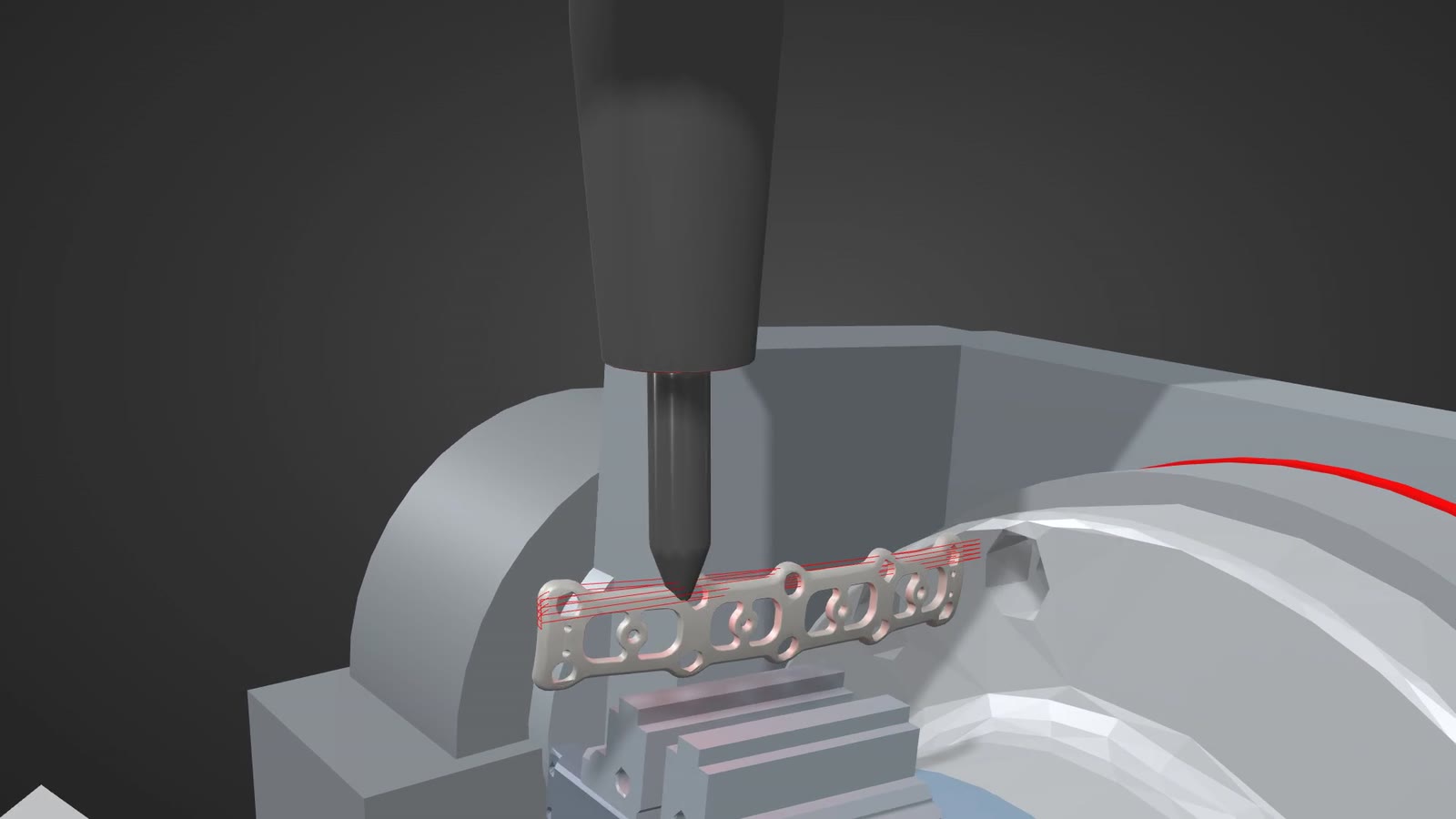
- Freeform surfaces: turbine blades, impellers, implants or molds can be machined in one go.
- Better surfaces: the tool works at a constant lead angle, with no transitions between orientations.
- Special tools: barrel cutters or flank milling need simultaneous axis motion.
- Collision avoidance: the tool can tilt away from obstacles during the cut.
Decision guide
| Situation | Recommendation |
|---|---|
| Prismatic parts, holes, pockets on several sides | 3+2 |
| Roughing with high forces | 3+2 |
| Freeform surfaces, blades, implants | 5-axis simultaneous |
| Finishing with barrel cutters or flank milling | 5-axis simultaneous |
| Deep cavities with undercuts | often 5-axis simultaneous |
| Older machine with limited dynamics | rather 3+2 |
What simultaneous machining demands from program and machine
In 5-axis simultaneous machining, toolpath quality decides the result. Jumps in the rotary axes, abrupt angle changes or singularities in the kinematics lead to marks on the surface or feed rate drops. That is why a smoothed tool axis, a post-processor matched to the machine kinematics and a simulation with the real machine model are essential.
On the machine side, functions such as tool center point management (TCPM, M128/FUNCTION TCPM on Heidenhain, TRAORI on Siemens) and a well-tuned path control help. The post-processor has to output these functions correctly.
Frequently asked questions
Is 5-axis simultaneous always faster?
No. For prismatic parts and roughing, 3+2 is often faster and more rigid. Simultaneous machining shows its advantages on freeform surfaces and with special tools.
Do I need a 5-axis machine for 3+2?
Yes, or at least a machine with two rotary axes, for example a 3-axis machine with a tilting rotary table.
What is TCPM?
Tool center point management: when the rotary axes move, the control compensates so the tool tip stays on the programmed path. This makes programs less dependent on the exact tool length.