What is a barrel cutter?
A barrel cutter, also called a circle segment cutter, has only a segment of a very large circle as its cutting edge instead of a full ball. This radius can be many times the tool diameter. You can hardly see it on the tool, but it makes all the difference on the surface.
Why the large radius matters
When finishing, a small cusp remains between two passes. Its height depends on the stepover and the radius of the cutting edge. The larger the radius, the larger the stepover can be for the same cusp height. A barrel cutter therefore often allows many times the stepover of a ball nose cutter, and finishing time drops accordingly.
A worked example: a Ø 10 mm ball nose cutter has a radius of 5 mm. At a cusp height of 3 µm this gives a stepover of about 0.35 mm. A conical barrel cutter with a 500 mm profile radius achieves about 3.5 mm at the same cusp height, ten times as much. The stepover grows with the square root of the radius: 100 times the radius gives 10 times the stepover. On curved surfaces the effective radius changes: on concave surfaces the stepover gets larger, on convex surfaces smaller.
Common shapes
- Conical barrel: tapered body with a large radius on the flank and a small radius at the tip. Very common, good for steep walls and tight areas.
- Tangential barrel: large radius on the flank, for walls and transitions into the floor.
- Lens shape: large radius on the face, for flat, gently curved surfaces.
- Oval shape: small radius at the tip blending into a larger one at the side, compact for tight areas.
Requirements
- 5-axis machine: the large radius has to sit tangential to the surface. That is only possible with an indexed or simultaneously guided tool.
- CAM strategy: the system has to know the exact tool profile and compute the tilt so the contact point lies on the large radius. hyperMILL, for example, offers tangent machining and tangent plane machining for this.
- Accurate tool measurement: even small profile deviations affect the contour.
- Good machine kinematics: a properly calibrated machine and smooth rotary axes prevent marks on the surface.
Typical applications
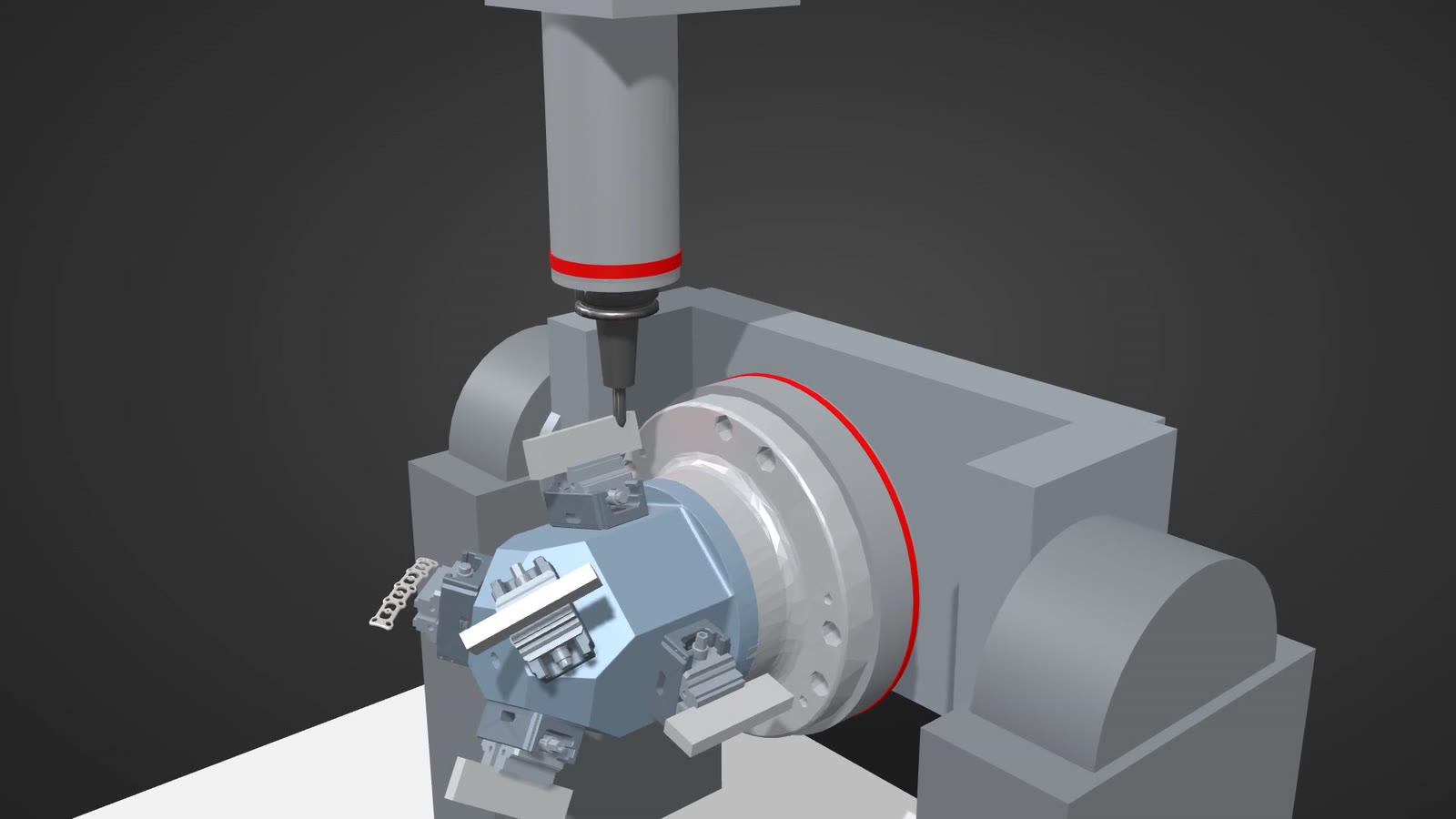
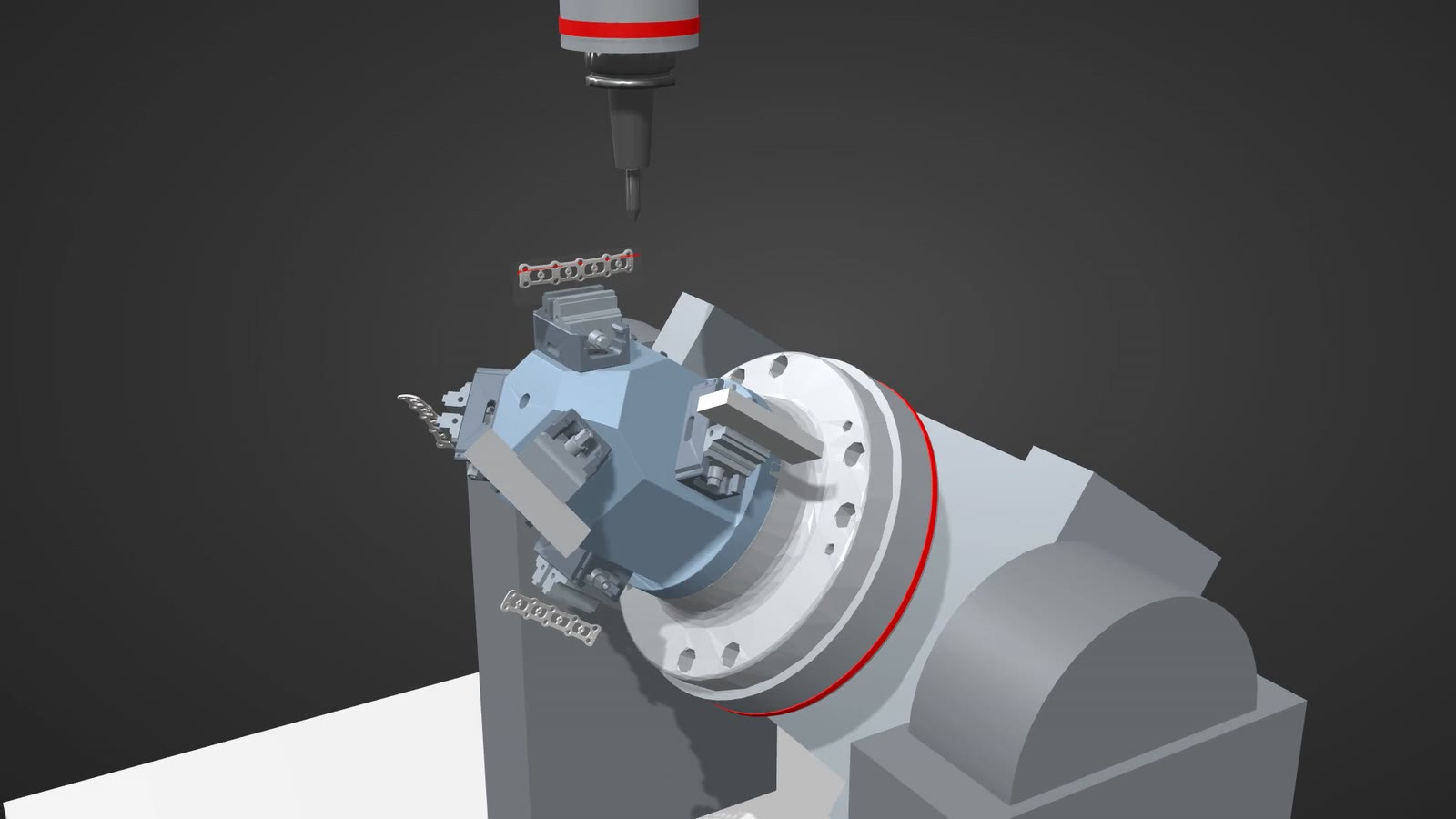
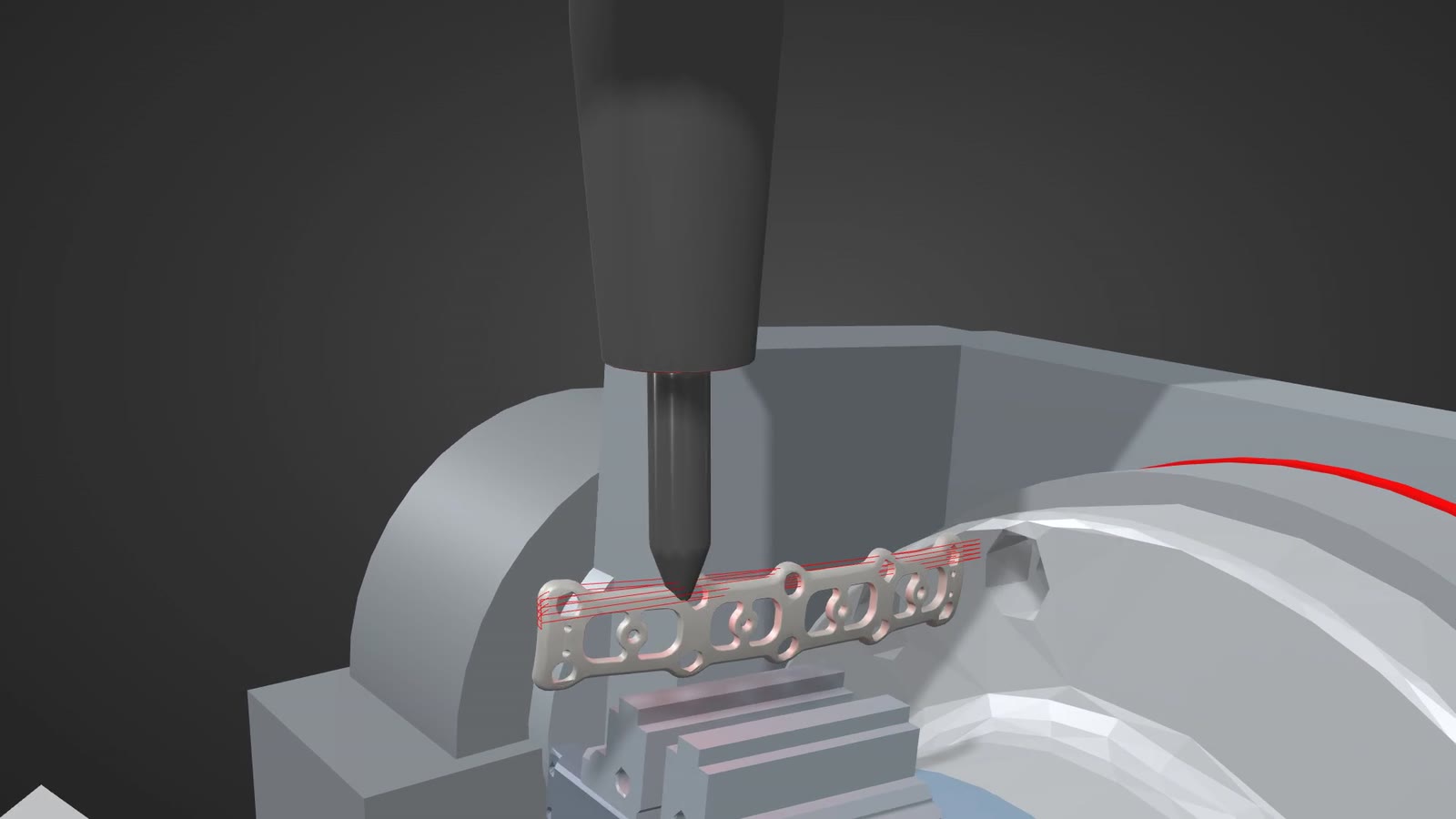
Barrel cutters have become established wherever large, curved or steep surfaces are finished: in mold making, turbine blades and blisks, tool making and medical technology. One example is finishing titanium bone plates, where conical barrel cutters run 5-axis simultaneously over the curved surfaces.
Limits
- Small internal radii and tight corners still need ball nose or bull nose cutters.
- Programming is more demanding than with ball nose cutters, and the tools cost more.
- Not every machine has the required accuracy and dynamics.
Calculator: ball nose or conical barrel cutter?
Do the maths: ball nose or conical barrel cutter?
Same cusp height, much wider stepover: enter your values. Empty stepovers are suggested from the cusp height.
Guide value for finishing the area: area ÷ (stepover × feed), without approach and retract moves. Stepover from cusp height: a = 2·√(2·r·h − h²).
Frequently asked questions
Can I use a barrel cutter on a 3-axis machine?
Not effectively. The large radius sits on the flank or face and has to be tilted tangential to the surface. That needs at least 3+2, usually 5-axis simultaneous.
How large is the radius of a barrel cutter?
It depends on the shape and manufacturer. Radii of many times the tool diameter are common, on some tools several hundred millimetres, for example 500 mm on the flank of a conical barrel cutter.
Does the barrel cutter replace the ball nose completely?
No. For small radii, corners and rest material the ball nose remains important. The barrel cutter takes over the large surfaces.